
Acoustic Wonders: Listening to Whale Songs Underwater
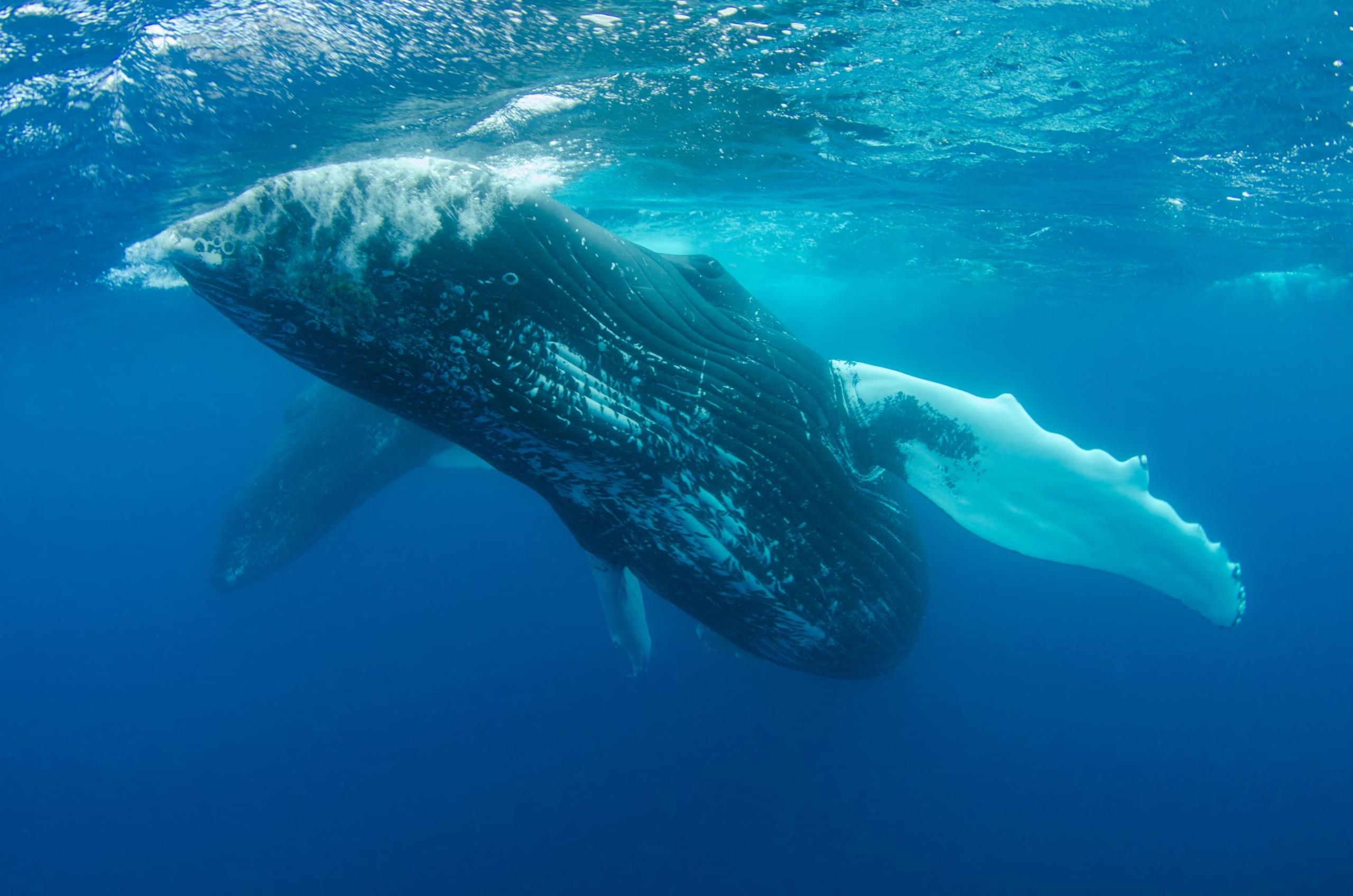
Standing on the deck of a catamaran in Maui, the visual spectacle is only half the story. You watch a massive forty-ton koholā (humpback whale) launch its entire body clear of the water, crashing down into the sapphire-blue moana (ocean) with a concussive shockwave that rattles right through your boots. But the moment you drop a specialized hydrophone into the brine, an invisible acoustic universe reveals itself. The apparent silence of the open sea disappears, replaced by an otherworldly chorus of deep thrums, rising moans, and metallic chirps that travel for miles beneath the ocean swells.
The Anatomy of a Song
Only male humpback whales (*Megaptera novaeangliae*) sing, and they perform these compositions primarily during the winter breeding season in the sheltered Hawaiian channels. These vocalizations are not random noise. They are structured acoustic patterns organized into distinct themes, phrases, and individual units lasting anywhere from 10 to 30 minutes. Male whales repeat these songs continuously for hours at a time. Research published by NOAA Fisheries shows that every singing male within the North Pacific population sings the exact same arrangement during a given season, though the pattern evolves note by note as winter progresses.
Sound Propagation in Water
Sound travels at roughly 1,500 meters per second through ocean water, which is approximately four and a half times faster than its speed through air. Water is dense and nearly incompressible, so acoustic pressure waves retain their intensity across immense distances. When a bull whale sings in the shallow waters off Lahaina, his low-frequency vocalizations travel through entire island channels. My salt-crusted field journal contains years of entries detailing how water density, thermal layers, and salinity channels focus these haunting notes directly against our vessel hulls, allowing passengers to feel the vibration before the audio speaker is even switched on.
When the hydrophone goes live and that deep bass note resonates through the boat cabin, everyone stops talking instantly. The acoustic power of a breaching whale feels like the raw heartbeat of the Pacific, but its song feels like a direct window into an ancient mind.
Capt. Kealani Kala
The Role of the Hydrophone in Modern Marine Observation
Capturing these underwater vocalizations requires equipment built specifically for marine environments. A hydrophone is a specialized underwater microphone constructed with ceramic piezoelectric elements. When sound waves hit the ceramic element, it flexes slightly and creates tiny electrical signals corresponding to the ocean pressure changes. An onboard preamplifier boosts this signal before a wired or wireless deck transmiter routes the audio into the vessel sound system. Detailed research programs conducted by the Hawaiian Islands Humpback Whale National Marine Sanctuary rely on passive acoustic arrays to track whale movements without disturbing the pods.
On modern eco-tours across Maui, Oahu, and the Big Island, captains drop hydrophones ten to thirty feet below the surface when engine power is turned off. The resulting live soundscape gives travelers an immediate window into the submerged marine ecosystem, turning a standard sightseeing cruise into a rich educational encounter. If you are comparing island options for your trip, check out our comprehensive island destinations guide to see where underwater listening conditions are clearest.
| Frequency Band | Acoustic Profile | Primary Behavioral Context |
|---|---|---|
| Low-Frequency Thrums | 20 Hz to 500 Hz (Deep Bass) | Long-distance navigation and broad pod communication |
| Mid-Range Moans & Cries | 500 Hz to 1,500 Hz (Tonal Notes) | Core song phrases shared across breeding grounds |
| High-Pitch Squeaks | 1,500 Hz to 4,000+ Hz (Sharp Chirps) | Competitive pod displays and energetic surface play |
| Rhythmic Social Pulsing | Variable low frequencies | Close-range contact between mother and calf pairs |
Deciphering Underwater Frequencies and Notes
The sounds echoing through the deck speakers span several octaves. Deep thrums at the bottom edge of human hearing can shake the wooden benches of a boat deck, while high-pitched squeaks rival the tone of a piccolo. Marine bioacousticians categorize these units into discrete sound classes to analyze how male song arrangements shift over time. When listening from the boat, you hear individual males alternating between long low-frequency sweeps and abrupt high-register cries, creating rhythmic phrases that loop with mathematical consistency.
Cultural Connections and Hawaiian Moʻolelo
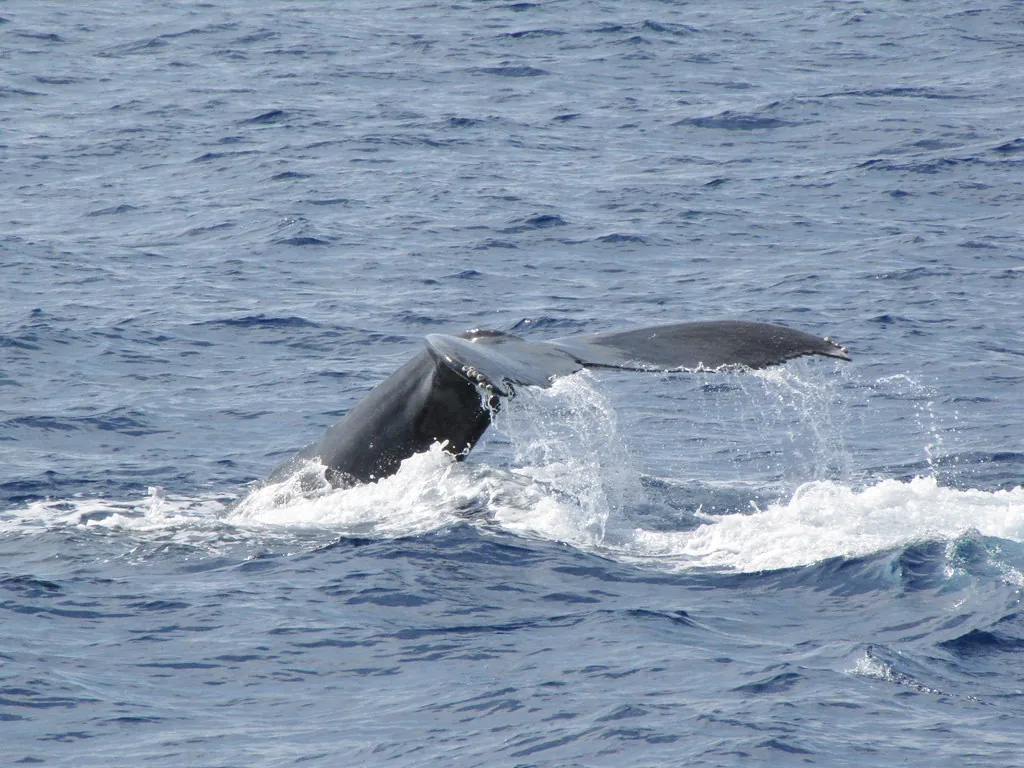
Centuries before modern researchers lowered hydrophones into the ocean, Native Hawaiian oceanfarers recognized the spiritual importance of the koholā. Traditional moʻolelo (oral histories and stories) place the whale as a physical manifestation of Kanaloa, the deity of the deep ocean, and a respected ʻaumakua (ancestral guardian family spirit). Fishermen sitting quiet in wooden outrigger canoes could feel the low-frequency vibrations radiating through the hull planking. They understood that these underwater voices were tied to the seasonal cycles of life in Hawaii. Hearing these songs today offers a bridge to that Hawaiian legacy, connecting modern visitors with the spiritual roots of the islands.
Seasonal Progression of the Music
The acoustic activity in Hawaiian waters changes in volume and structure throughout the winter migration cycle. The first solitary whales arrive in late November and early December, singing short or fragmented variations of the song. Density builds rapidly through January, reaching peak volume in February when thousands of koholā occupy the shallow channels. During these peak months, dropping a hydrophone into the water produces a dense choir of overlapping voices where individual songs layer over one another.
By late March and April, the song begins to break apart as male whales prepare for the long journey north to Alaskan feeding grounds, deciding which ocean depth they dive down to. To coordinate your visit around peak vocal activity and favorable sea states, review our best time and weather guide. Travelers who plan around peak migration dates get the highest probability of hearing clear, uninterrupted acoustic performances.
The ocean is never truly silent. Drop a microphone beneath the surface off West Maui in February, and you step into a continuous ocean auditorium that has been performing for millions of years.
Scientific Research and Passive Acoustic Monitoring
Passive Acoustic Monitoring (PAM) is one of the most effective non-invasive research tools available to marine scientists today. By deploying autonomous hydrophone units anchored to the seabed, researchers monitor whale populations twenty-four hours a day without deploying physical tags or chasing animals with motorized vessels. Data collected from these hydrophones helps scientists calculate population abundance, track regional movements between islands, and analyze how environmental factors alter whale behavior over time. Insights from official monitoring projects hosted by the Hawaii Tourism Authority emphasize how sustainable eco-tourism directly supports local conservation awareness.
Ocean Noise Pollution and Habitat Protection
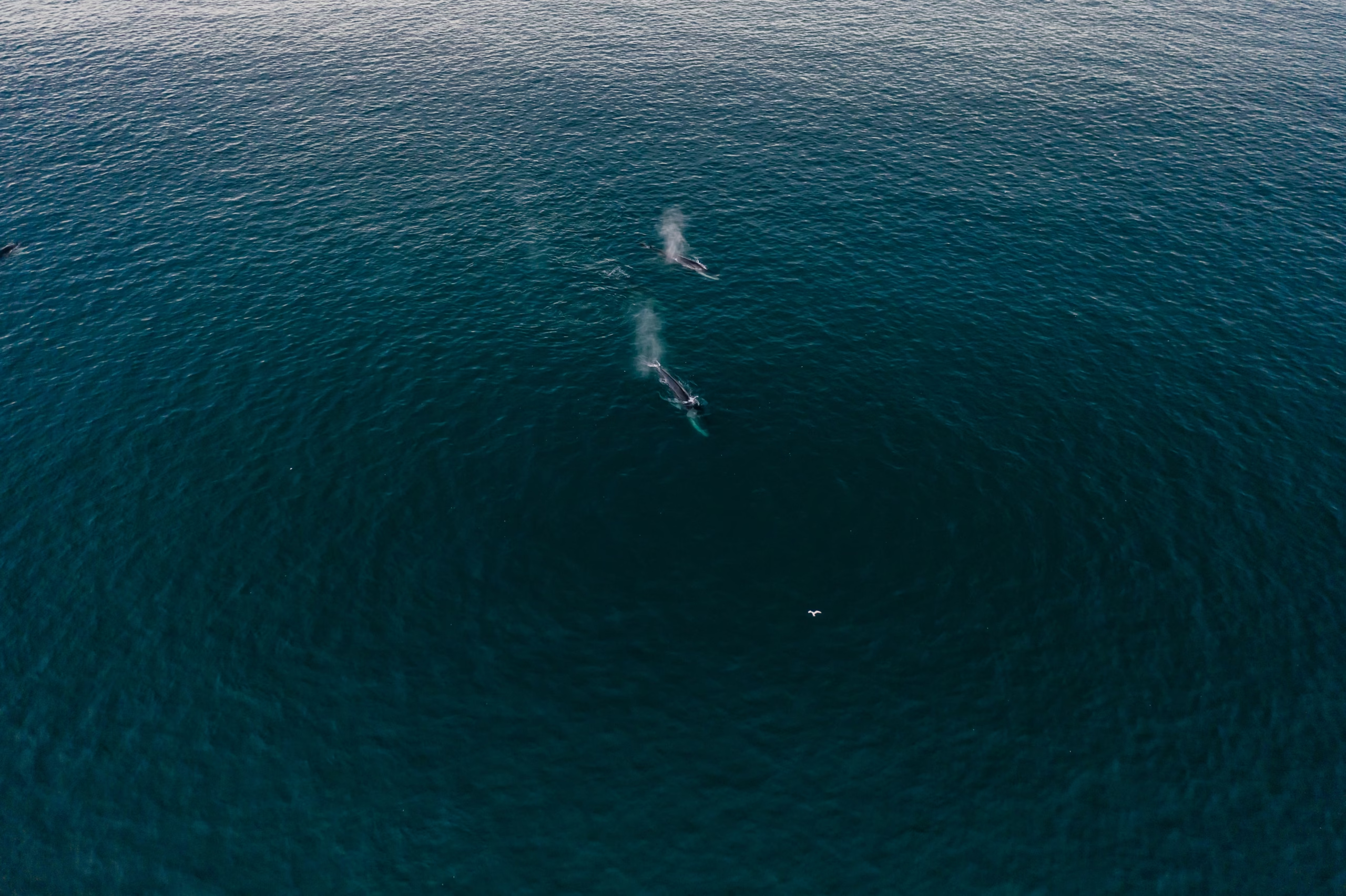
Human maritime activities introduce continuous artificial noise into the ocean environment. Large commercial cargo vessels, high-speed ferries, and military sonar systems emit low-frequency sounds that overlap with the natural acoustic frequencies used by humpbacks. Noise pollution can force singing males to raise their pitch, alter their vocalization duration, or abandon critical breeding areas altogether. Responsible tour operators follow strict environmental protocols to safeguard teh acoustic habitat. They cut engine throttles near pods, use quiet hull designs, and strictly enforce the 100-yard federal distance rule established under the Marine Mammal Protection Act.
Choosing the Right Acoustic Tour Excursion
Not every whale watching tour carries hydrophones on board, so selecting the right vessel is essential if underwater listening is a priority for your trip. Small to mid-sized eco-catamarans or rigid inflatable zodiacs often provide superior acoustic experiences compared to massive multi-deck passenger vessels. Smaller passenger counts keep deck noise to a minimum, ensuring that every person on board can hear subtle pitch changes through the speaker system without interference.
When selecting your excursion, look for non-profit research organizations or dedicated eco-operators who incorporate marine biologist naturalists into their crew. Morning departures are generally recommended because calm ocean surfaces make hydrophone deployment easier and keep wind noise down over the microphone. If you are preparing your gear and packing list for an early boat launch, check our guide on what to wear and pack for whale watching to stay comfortable out on the water. Prices for guided excursions generally range between $50 and $130 per person, and standard tipping guidelines suggest 15% to 20% for hardworking deck crew members.
Practical Answers for Ocean Travelers
Visitors planning a trip to Hawaii often wonder about the logistics of whale watching. Maui is widely considered the premier island for viewing and listening because the shallow, protected Auau Channel between Maui, Molokai, and Lanai creates an ideal sanctuary for singing males and nursery pods. Shore-based lookouts along elevated coastal points offer great visual sightings, but hearing the actual underwater songs requires getting out on a vessel equipped with a hydrophone array. Swimming with humpback whales is illegal in Hawaii under federal regulations, so observation is strictly conducted from boat decks or designated shore locations.
To learn more about booking certified operators with live hydrophones, explore our guided tours and booking hub. If you want to dive deeper into the science behind their winter migration from northern waters, read our detailed article on humpback whale migration patterns in Hawaii. For photography enthusiasts hoping to capture surface actions like breaches and tail slaps, take a look at our photographing breaching whales camera guide before setting sail. You can also explore our main portal for the best whale watching in Hawaii to plan your complete itinerary.
Field Notes from the Captain’s Log
I still remember a crisp morning in late January off the coast of Olowalu. The ocean was completely glass, reflecting the West Maui Mountains like a polished mirror. We cut the engines half a mile out from a stationary bull whale and lowered our hydrophone down into the blue stillness. Seconds later, a low 30-Hertz rumble hummed through the fiberglass hull beneath our bare feet. It was a sound so deep you felt it in your ribs before your ears picked it up. A young boy standing on the forward bow looked down into the water with wide eyes, completely speechless. That moment is a reminder of why we protect these ocean giants and why listening to their ancient songs is a privilege every traveler should experience at least once in their lives.
For more inspiration on complementing your marine adventure with local island experiences, explore our selection of other things to do in Hawaii during your winter vacation.