
Hawaii vs. Alaska: Comparing Top North American Whale Destinations
Choosing where to watch whales in North America comes down to a fundamental question about animal behavior and climate preference. My salt-crusted field journals from decades on the water trace two distinct chapters in the life of humpback whales. You either witness them resting, mating, and giving birth in the tropical waters of Hawaii, or you watch them gorge on krill and small fish in the nutrient-dense fjords of Alaska. Both regions offer world-class marine viewing, but the experiences are entirely diferent depending on which coast you travel to.
The Hawaiian Winter Sanctuary
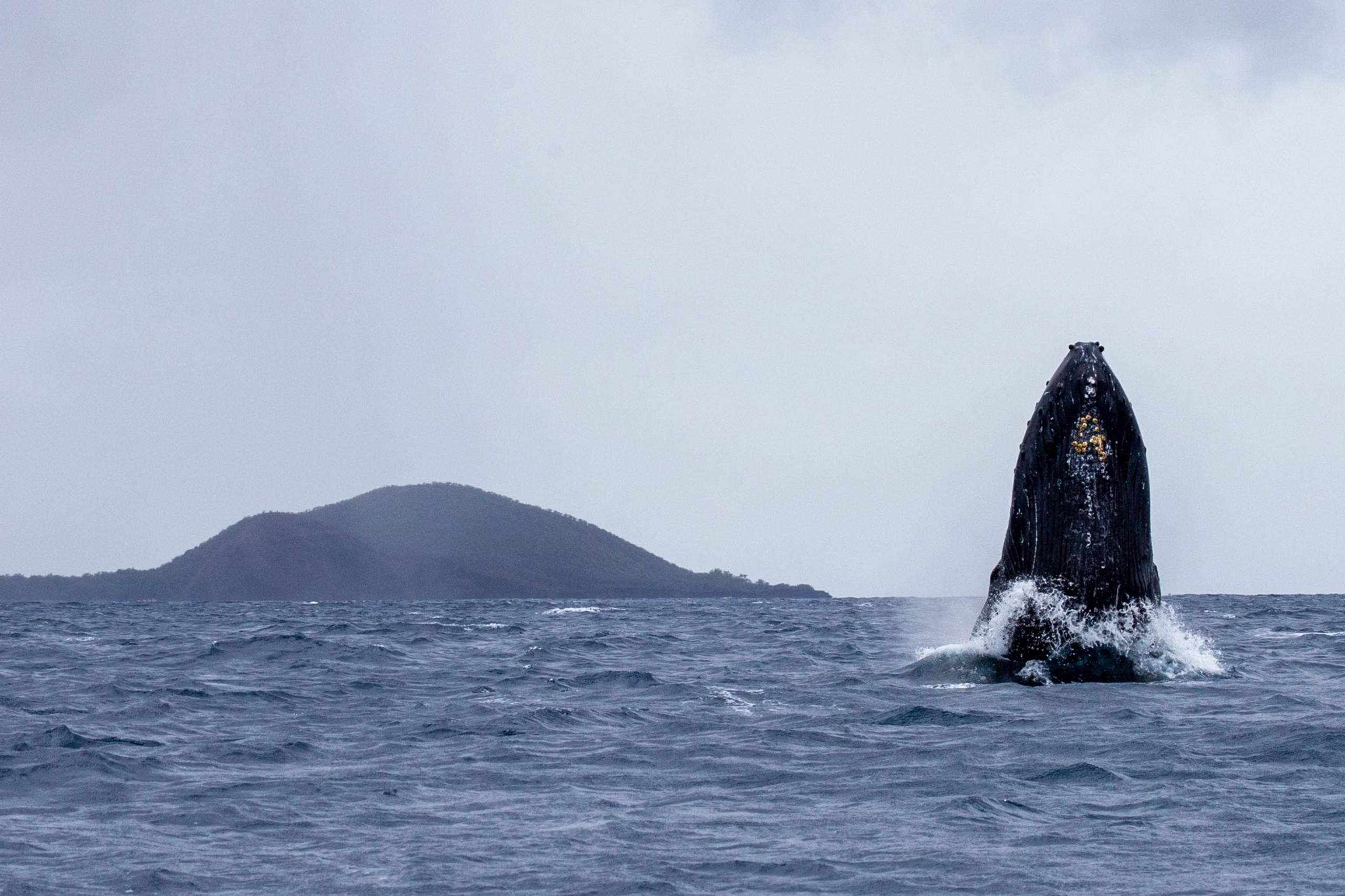
The Hawaiian winter advantage centers on warm water, calm tradewind lee shores, and the deep cultural presence of the koholā (humpback whales). The best time to whale watch in hawaii spans the peak winter migration period, with the primary whale watching months in hawaii running from December through April. During this window, thousands of humpbacks complete a massive 3,000-mile journey from their sub-polar summer feeding grounds to the shallow, sheltered channels surrounding Maui, Molokai, and Lanai. The warm moana (ocean) feels alive with theatrical surface activity. Captains and passengers regularly observe intense competition pods, where multiple escort males battle fiercely for access to a female, creating an explosive display of flukes, pectoral fins, and massive breaches that shake the surface of the sea. For travelers who prefer warmer weather and high-energy breeding displays, visiting during these months is ideal.
“When a forty-ton whale launches itself into the air off the leeward coast of Maui, the raw concussive sound hits your chest before your eyes even register the splash. It is the true heartbeat of the Pacific.”
The Alaskan Summer Feeding Grounds
Steaming north for the summer months reveals an entirely distinct ecosystem. The Alaskan summer advantage gives you dramatic glacier backdrops, misty fjords, and high-energy cooperative feeding strategies. Between May and September, humpbacks inhabit the cold coastal corridors of Southeast Alaska, including Juneau, Sitka, and Glacier Bay. Instead of resting or pursuing mates, the whales here spend up to twenty hours a day consuming massive quantities of herring and zooplankton. This is where you witness bubble-net feeding, a complex cooperative hunting technique where a circle of whales releases a ring of air bubbles to trap fish before lunging vertically through the center with wide-open mouths. Learn more about how this connects back to Hawaii in our guide on humpback whale migration patterns.
Logistical Comparison and Seasonal Planning
Planning your journey requires understanding how weather, vessel types, and accessibility change between the two destinations. The [Official NOAA Sanctuary Website] oversees marine protections in both regions, enforcing strict approach boundaries to keep wildlife safe. Typical excursion prices range from $50 for basic harbor cruises up to $110 for specialized small-vessel charters. Below is a detailed breakdown comparing the practicalities of planning a whale-watching trip to Hawaii versus Alaska.
| Factor | Hawaii (Winter) | Alaska (Summer) |
|---|---|---|
| Peak Season | January through March | June through August |
| Primary Whale Activity | Breeding, calving, surface aggression | Intensive feeding, bubble-net coordination |
| Water and Air Temp | Warm air (75-80°F), warm water (77°F) | Cool air (50-65°F), cold water (50°F) |
| Typical Vessel | Catamarans, high-speed zodiac rafts | Enclosed viewing vessels, expedition boats |
| Acoustic Experience | Solitary complex male whale songs | Surface vocalizations, breath blasts |
Tropical Packing Realities
Packing for Hawaii means preparing for bright sun, ocean spray, and breezy boat decks. Polarized sunglasses are essential to cut through ocean glare and spot dark shadows beneath the surface. Lightweight windbreakers keep you comfortable during high-speed catamaran runs, and reef-safe sunscreen protects the ocean environment. Read our comprehensive packing guide for full details on deck footwear and optics.
Sub-Polar Expedition Gear
Preparing for Southeast Alaska demands a completely diferent wardrobe. You need thermal base layers, heavy waterproof outer shells, insulated gloves, and sturdy non-slip boots. The weather in Juneau or Seward shifts rapidly from clear skies to cold downpours, meaning layering is teh key to staying warm while scanning the horizon for massive flukes against towering glaciers.
Acoustic Environments and Vessel Dynamics
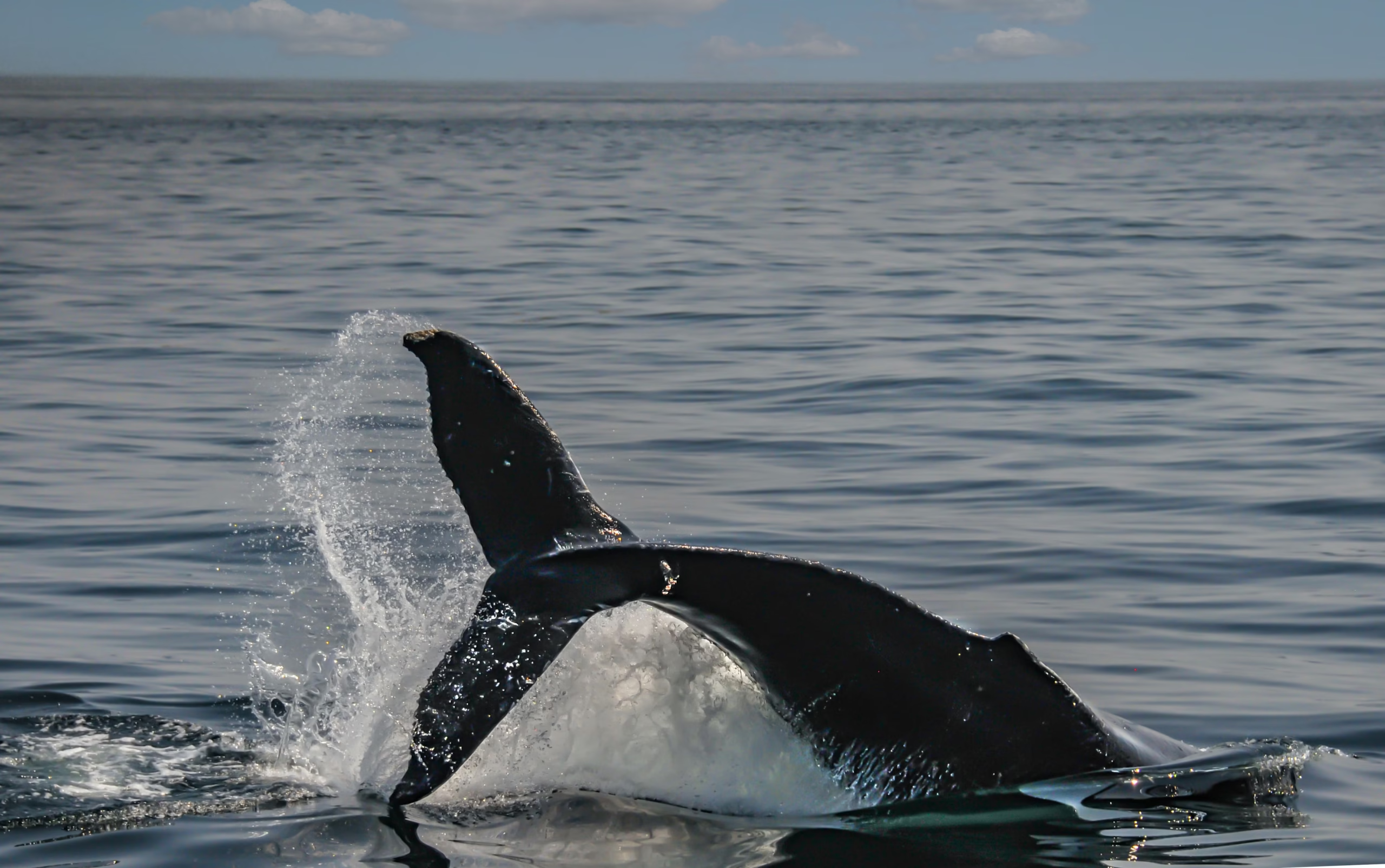
The sensory experience extends far beyond what you see on the surface. In Hawaii, dropping a hydrophone into the warm moana reveals haunting, complex whale songs sung by lone males. These resonant frequencies travel miles through the ocean water, a phenomenon you can explore further in our detailed post on listening to whale songs underwater. In contrast, Alaskan waters vibrate with the ambient surface sounds of plunging bubble-net groups, gull cries, and the cracking of ancient tidewater glaciers in [Official Kenai Fjords National Park Site]. Vessel operators in both regions follow regulations promoted by groups like the [Alaska Whale Watching Information] to ensure human presence does not disrupt natural feeding or breeding behaviors.
“Whether you choose the sun-drenched channels of Maui or the misty fjords of Southeast Alaska, standing at the rail while a wild cetacean surfaces changes your perspective on the planet forever.”