
Marine Conservation and Federal Protection Laws in Hawaii
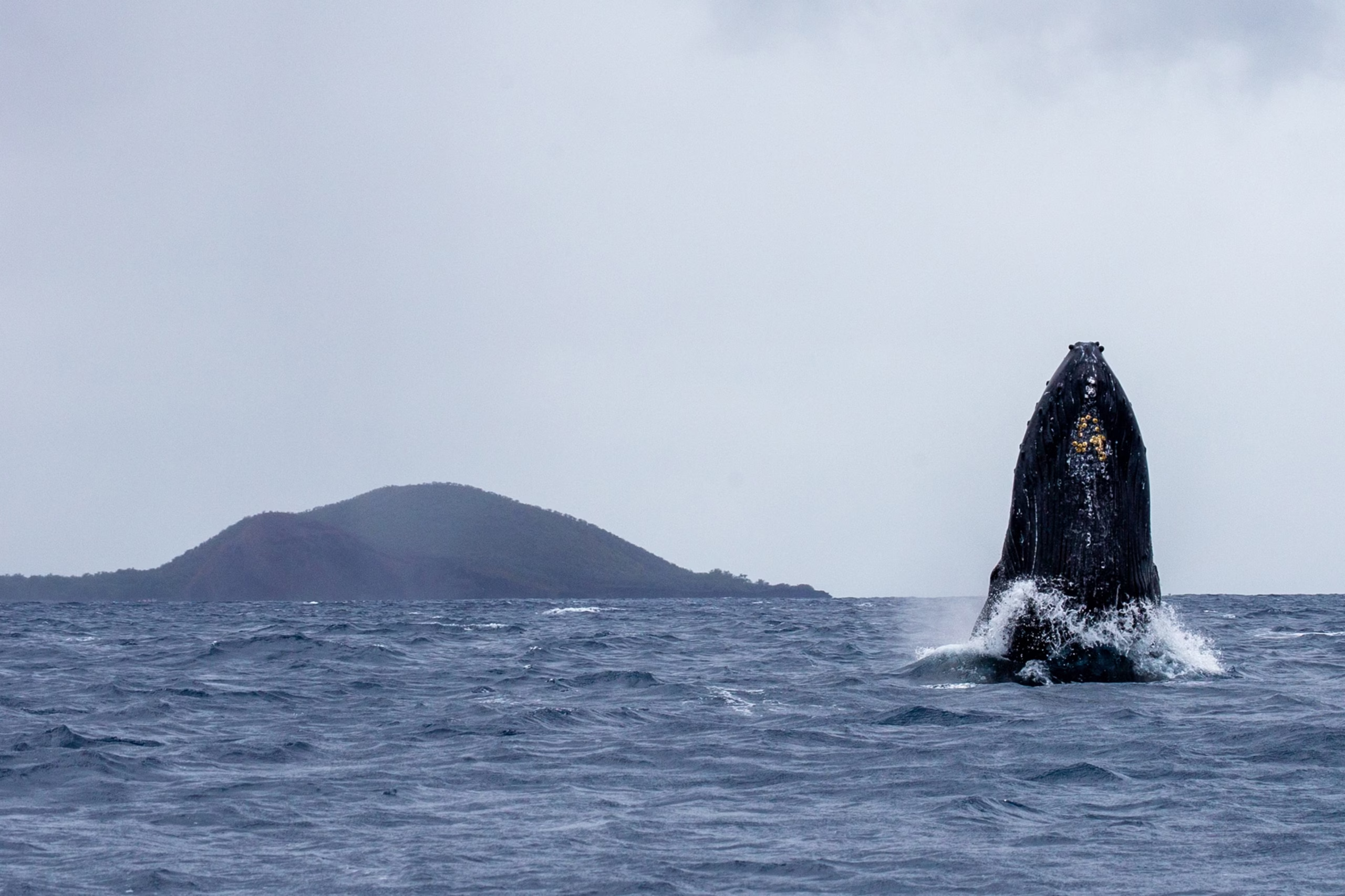
Stepping onto the rolling deck of a research vessel in the pre-dawn darkness off Maui brings an immediate, humbling clarity. My salt-crusted field journal contains years of scribbled notes documenting the powerful exhales of the koholā, the Hawaiian humpback whale, echoing across the calm morning moana (ocean). The sound resembles a deep oceanic breath, reverberating through your chest long before the water cascades off a massive dorsal fin. Every winter, thousands of these marine giants undertake an arduous 3,000-mile journey from the nutrient-rich feeding grounds of Alaska to the sheltered, shallow channels of the Hawaiian Islands. Here, they court, mate, and give birth to the next generation in warm, crystal-clear tropical waters. However, these tranquil nursery grounds require vigilant, uncompromising oversight. Protecting these magnificent creatures demands strict adherence to state and federal statutes designed to preserve the delicate heartbeat of the Pacific.
The Legislative Foundation: MMPA and the Endangered Species Act
Modern marine conservation in Hawaii rests upon two critical pillars of federal environmental law. The first is the landmark Marine Mammal Protection Act (MMPA), enacted by Congress in 1972. The MMPA established a sweeping moratorium on the “take” of all marine mammals in United States territorial waters. Under statutory definitions, to “take” a marine mammal means to harass, hunt, capture, collect, or kill, or to attempt any such action. Harassment is further divided into Level A (actions with the potential to injure a marine mammal in the wild) and Level B (actions with the potential to disturb behavioral patterns, including migration, breathing, nursing, breeding, feeding, or sheltering).
Complementing the MMPA is the Endangered Species Act of 1973. For decades, global commercial whaling severely depleted North Pacific humpback populations, driving them to the brink of extinction. Rigorous legal protection allowed the Hawaiian humpback population to stage an extraordinary biological recovery. In 2016, the National Oceanic and Atmospheric Administration (NOAA Fisheries) reclassified the Hawaii distinct population segment from endangered to a status of post-delisting monitoring. Despite this ecological milestone, full protection under the MMPA remains strictly enforced to safeguard their fragile calving grounds.
The Hawaiian Islands Humpback Whale National Marine Sanctuary
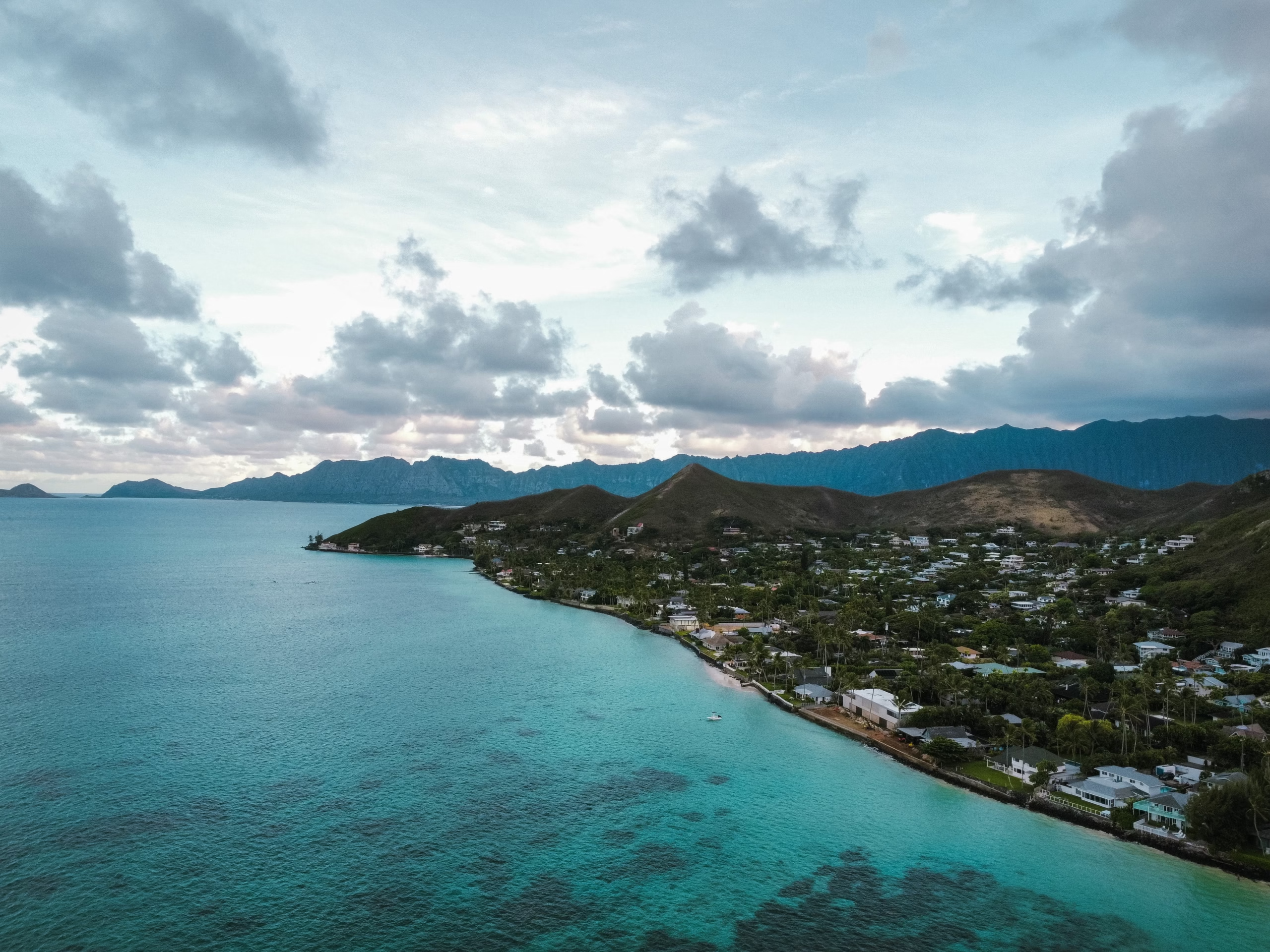
Recognizing the vital ecological importance of Hawaiian waters, Congress established the Hawaiian Islands Humpback Whale National Marine Sanctuary in 1992 through the National Marine Sanctuaries Act. Encompassing approximately 1,400 square miles of coastal ocean, the sanctuary covers designated areas around Maui, Molokai, Lanai, Kauai, Oahu, and the Big Island. The highest concentration of whales gathers within the Maui Nui basin, a protected shallow plateau where depths rarely exceed 600 feet.
Conservation is not a passive sentiment, brah. It is an active, daily discipline on the water where every captain and passenger holds responsibility for keeping these nursery waters calm.
Kealani Kala, Marine Biologist & Former Captain
The sanctuary serves as a co-managed marine zone where federal authorities and the State of Hawaii coordinate research, education, and law enforcement. While the official humpback whale migration patterns bring animals to Hawaii between November and May, the hawaii whale watching season peak occurs between January and March, when thousands of humpbacks occupy these shallow channels simultaneously. Navigating these waters requires an acute understanding of statutory boundaries and environmental mandates, regardless of which boat deck you decide to step on to.
Decoding the Mandate: The Strict 100-Yard Approach Limit
The core legal rule governing whale encounters in Hawaii is simple yet absolute: no person or vessel may approach a humpback whale within 100 yards (91.4 meters). This safety boundary applies within 200 nautical miles of the Hawaiian Islands, extending from the shoreline out into federal oceanic waters. The 100-yard rule applies universally to every watercraft, including motorized tour catamarans, sailing yachts, high-speed zodiac rafts, ocean kayaks, stand-up paddleboards (SUPs), windsurfers, and individual surfers.
Many visitors ask whether they can swim with whales while snorkeling or diving in Hawaii. The legal answer is an unequivocal no. Swimmers, free-divers, and scuba divers are bound by the exact same 100-yard restriction. Intentionally sliding into the water near a pod or swimming toward a surfacing whale constitutes illegal harassment under federal law. If a whale approaches a stationary vessel or swimmer on its own accord, the operator must put engines in neutral and remain motionless until the animal moves beyond the 100-yard perimeter.
| Vessel / Observer Category | Minimum Legal Distance | Enforcement Body | Primary Legal Mandate |
|---|---|---|---|
| Motorboats, Sailboats, Catamarans | 100 Yards (300 Feet) | NOAA OLE / USCG / DLNR | MMPA / Sanctuary Regulations |
| Kayaks, SUPs, Surfboards | 100 Yards (300 Feet) | NOAA OLE / DOCARE | MMPA / Federal Approach Rules |
| Swimmers, Snorkelers, Scuba Divers | 100 Yards (300 Feet) | NOAA OLE / DOCARE | MMPA Harassment Statutes |
| Drones & Unmanned Aerial Systems | 1,000 Feet Altitude | FAA / NOAA Fisheries | Federal Aviation / MMPA Rules |
| Manned Commercial / Private Aircraft | 1,000 Feet Altitude | FAA / NOAA Fisheries | Federal Aviation Regulations |
Aerial Protections: The 1,000-Foot Ceiling for Drones and Aircraft
With the rapid proliferation of recreational drone technology, aerial disturbance has emerged as a significant threat to marine mammals. Federal regulations prohibit operating any aircraft, including remote-controlled unmanned aerial systems (UAS or drones), within 1,000 feet (304.8 meters) of a humpback whale in sanctuary waters. Low-flying drones project both visual shadows and low-frequency motor noise that penetrate the ocean surface, frequently startling mothers resting with newborn calves.
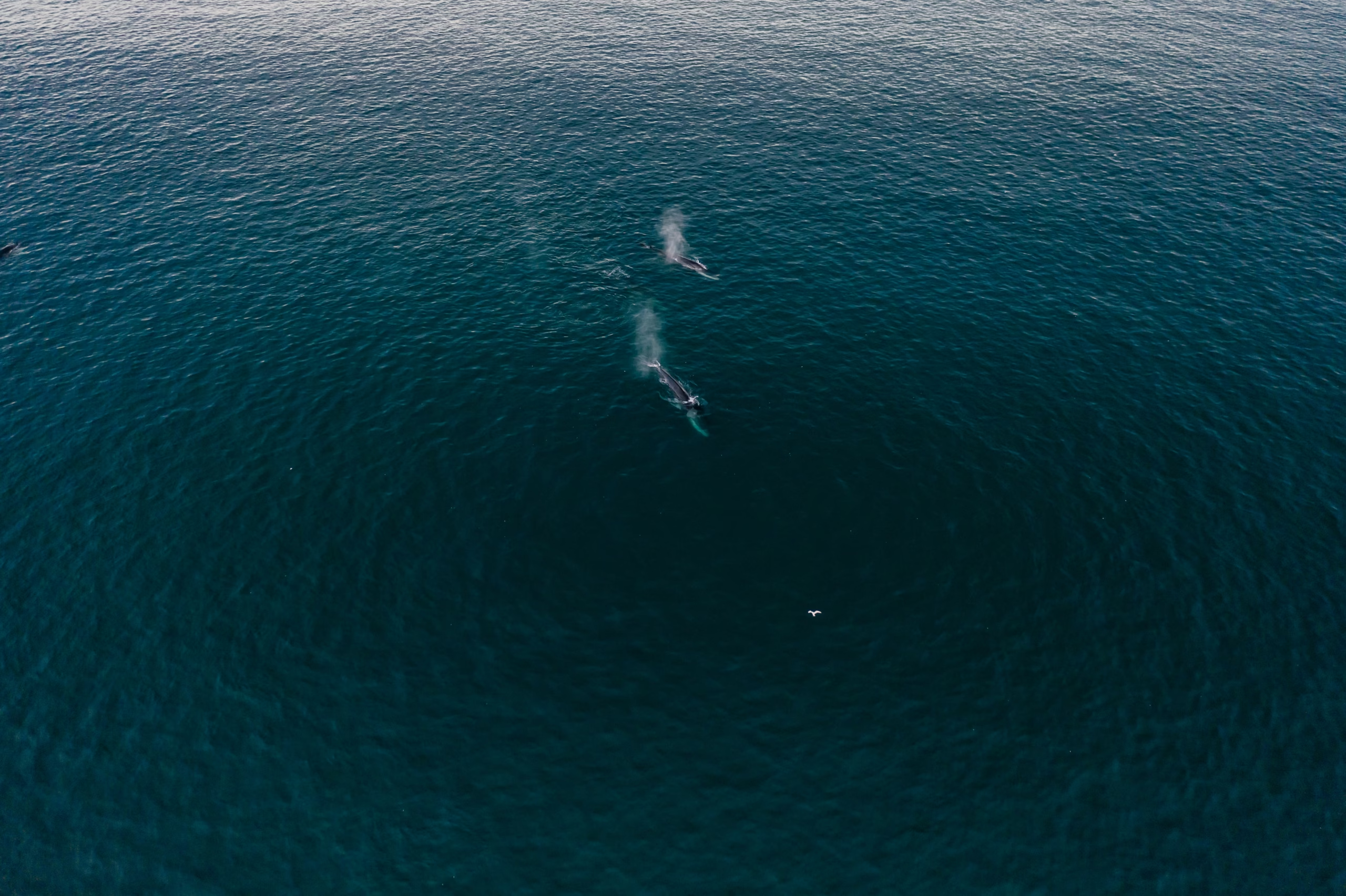
Licensed commercial drone pilots filming for scientific research or authorized media projects must secure explicit federal permits from NOAA Fisheries and adhere to stringent flight parameters. For recreational travelers visiting Hawaii during the humpback whale watching season hawaii, operating personal drones over coastal waters near whales is illegal and routinely monitored by enforcement officers onshore and at sea.
Prohibited Tactics: Interception and “Leapfrogging”
One of the most dangerous and heavily penalized maneuvers on the water is vessel interception, colloquially known as “leapfrogging.” This illegal tactic occurs when a boat captain maneuvers at high speed to position their vessel directly in the predicted travel path of a moving pod, cutting engine power so that the whales surface within the 100-yard zone. Federal statutes explicitly prohibit placing a boat, kayak, or drone in the path of a humpback whale.
Why Leapfrogging Harms Whales
Humpbacks in Hawaii are on a strict energy budget. They do not feed while in tropical waters, relying entirely on blubber reserves stored during Alaskan summers. Forcing a mother or calf to change course, alter swim speeds, or dive prematurely wastes precious energy needed for calf growth and the long return migration north.
Legal Navigation Standards
Ethical captains operate parallel to traveling pods, matching speed from a distance greater than 100 yards. Vessel movement must remain predictable, slow, and non-threatening at all times, allowing animals to move freely without physical obstruction or stress.
Recognizing Behavioral Disruptions and Stress Signals
During my years commanding charter cruises off Lahaina and Maalaea, learning to read subtle whale body language was as crucial as monitoring nautical charts. Disturbed humpbacks exhibit distinct stress behaviors that every mariner must recognize. When an animal feels crowded or threatened by improper vessel approach, its natural surface patterns change immediately.
- Rapid Behavioral Shifts: Sudden, sharp turns away from a vessel’s heading or abrupt changes in swim speed.
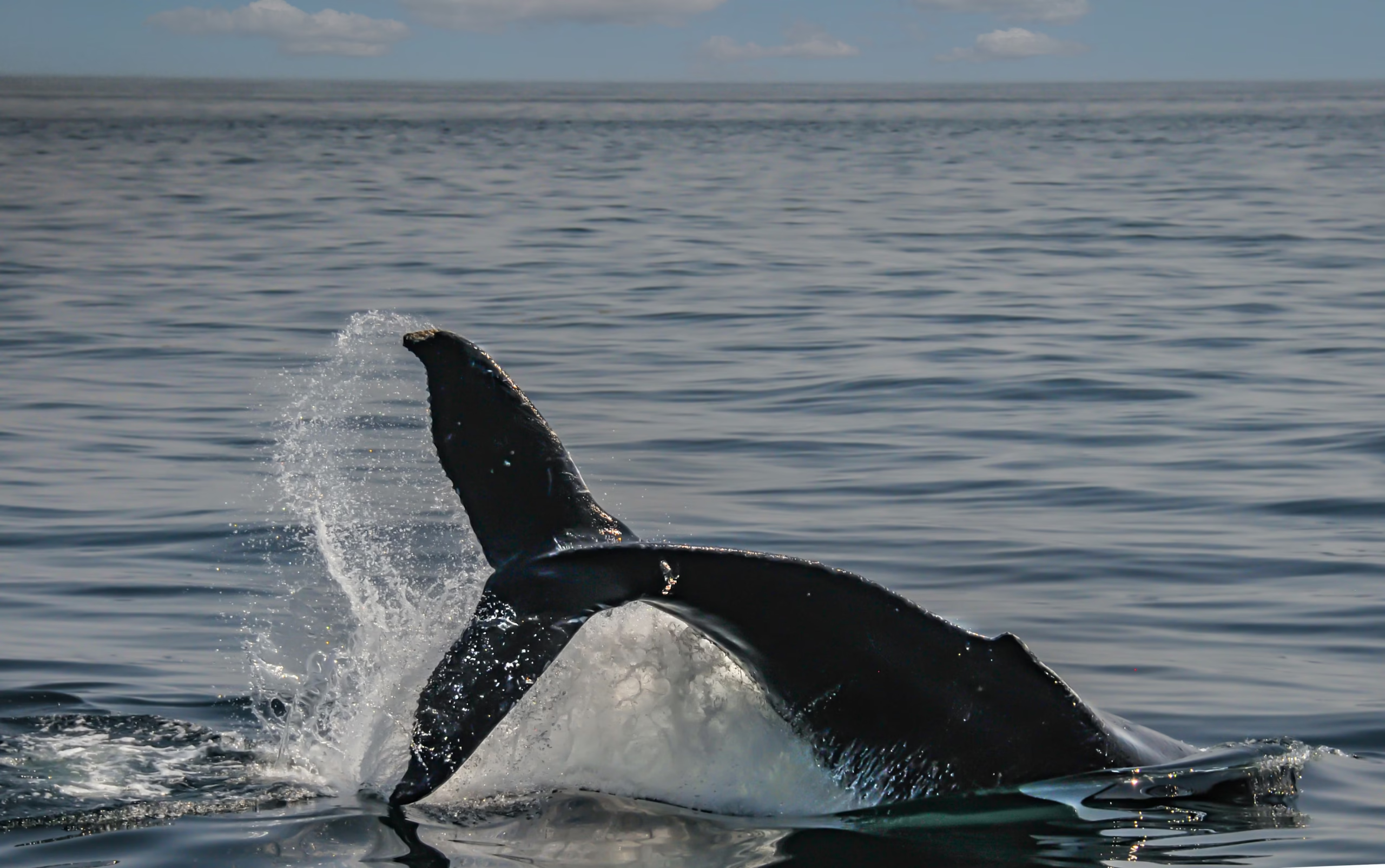
- Aggressive Surface Slapping: Repeated, violent tail slapping (lobtailing) or pec slapping aimed directionally toward an approaching watercraft.
- Forced Submergence: Prolonged dives with brief, erratic surface exhales, short-circuiting normal surface resting periods.
- Calf Separation: A mother positioning her multi-ton body directly between a boat and her young calf to shield it from proximity.
- Trumpet Blows: Unusually loud, explosive exhalations that produce a trumpet-like sound, signaling high irritation or distress.
When any of these behaviors occur, official NOAA guidelines dictate that vessel operators must immediately throttle back, disengage propellers if necessary, and slowly back away to increase physical distance. Travelers interested in observing natural behaviors without causing distress should check our advice on photographing breaching whales from standard distance limits.
Speed Restrictions in Shallow Winter Nursery Waters
Vessel strikes represent one of the leading causes of severe injury and mortality for humpback whales in Hawaiian waters, particularly young calves that spend significant time resting just beneath the ocean surface. Newborn calves breathe every three to five minutes and lack the physiological capacity for deep, sustained dives. Because they surface frequently and unpredictably, high-speed vessel traffic poses a grave threat during peak seasn months.
A impact between a speed boat and a sleeping calf at twenty knots is almost always fatal for the whale. Speed management in shallow channels is our primary tool to protect teh fragile ecosystem.
To reduce collision risks, NOAA Fisheries strongly recommends voluntary speed limits across all Hawaiian waters shallower than 600 feet (100 fathoms) during winter. Vessel operators are urged to maintain speeds of 15 knots or less during general transit. When operating within 400 yards of any humpback whale, captains must reduce speed to 6 knots or less to maximize reaction time and maneuverability.
Enforcement Agencies, Inspections, and Federal Penalties
Enforcement of marine wildlife protection laws in Hawaii involves a coordinated multi-agency effort. The primary federal enforcement agency is the NOAA Office of Law Enforcement (OLE), working alongside the United States Coast Guard (USCG). On the state level, officers from the Hawaii Department of Land and Natural Resources (DLNR DOCARE) possess dual-credentialed authority to enforce federal sanctuary rules in state waters.
Violations of the Marine Mammal Protection Act or sanctuary regulations carry stringent administrative and criminal penalties. Civil fines for approaching within 100 yards or harassing whales range from $1,000 to over $27,000 per violation. Flagrant or willful violations can lead to criminal prosecution, forfeiture of commercial vessel licenses, impoundment of watercraft, and federal imprisonment. Official inquiries and reports regarding regulatory compliance are handled directly through federal marine offices:
Protected Resources Division
National Marine Fisheries Service, Pacific Islands Regional Office
1845 Wasp Blvd., Bldg. 176, Honolulu, HI 96818
Official Portal: hawaiihumpbackwhale.noaa.gov
Entanglement Response Networks: Saving Ensnared Ocean Giants
Heavy commercial fishing gear, abandoned synthetic lines, and ghost nets originating thousands of miles away present an ongoing environmental danger in the open Pacific. Whales migrating to Hawaii sometimes arrive trailing hundreds of feet of heavy rope wrapped around their caudal peduncle, pectoral flippers, or baleen plates. Entanglement causes severe skin abrasion, systemic infection, starvation, and eventual drowning.
Hawaii hosts one of the world’s most advanced marine mammal entanglement response networks, managed by NOAA Fisheries under strict federal permits. The public is strongly advised never to attempt disentangling a whale independently. Cutting a trailing buoy or line without specialized training often removes the buoy that responders use to track the animal, while putting human lives in extreme danger beside a stressed, 40-ton wild animal. Observers who spot an entangled whale should immediately maintain legal distance and report the location, heading, and GPS coordinates to the NOAA Marine Mammal Hotline at (888) 256-9840 or marine VHF Channel 16.
Ethical Ocean Stewardship: Embracing Kuleana on Excursions
In Hawaiian culture, the concept of kuleana represents a sacred reciprocal relationship between privilege and personal responsibility. Visiting the ocean home of the koholā is a privilege that demands active stewardship from every traveler. Choosing respectful, low-impact observation methods ensures that Hawaii remains a secure sanctuary for generations of marine life to come.
When selecting a commercial tour operator, look for eco-certified companies that employ dedicated marine naturalists, utilize low-emission engines, and actively participate in hydrophone audio research. Passengers interested in listening to live acoustic vocalizations during their tour can read more about listening to whale songs underwater on specialized hydrophone vessels. If you prefer shore-based viewing, elevated coastal lookouts like the Makapuu Lighthouse Trail on Oahu or the McGregor Point Lookout on Maui offer phenomenal vantage points where you can watch breaches and blowholes without ever disturbing the waters below.
By respecting federal distance regulations, honoring speed guidelines, and supporting certified naturalists across our island destinations, you become an active partner in one of the greatest conservation success stories in modern ocean history. Explore options on our guided tour booking hub to reserve your spot with operators who prioritize whale safety above all else.