
Photographing Breaching Whales: Tips and Camera Settings
My salt-crusted field journal sits open on the chart table, pages warped from decades of moist air and flying spray. Inside, marginalia scribbled during thousands of hours on the bridge details the exact micro-seconds a koholā (humpback whale) breaks the surface of the moana (ocean). Capturing that explosion of forty tons of ocean life airborne requires far more than luck. It demands an intimate understanding of cetacean movement and strict control over your camera body before the boat rolls in the swell. I have spent years guiding photo expeditions across the Auau Channel for whale watching hawaii maui tours, and the sound of forty tons hitting the sea feels like the heartbeat of the Pacific rising through the hull.
Anticipating Movement on the Open Water
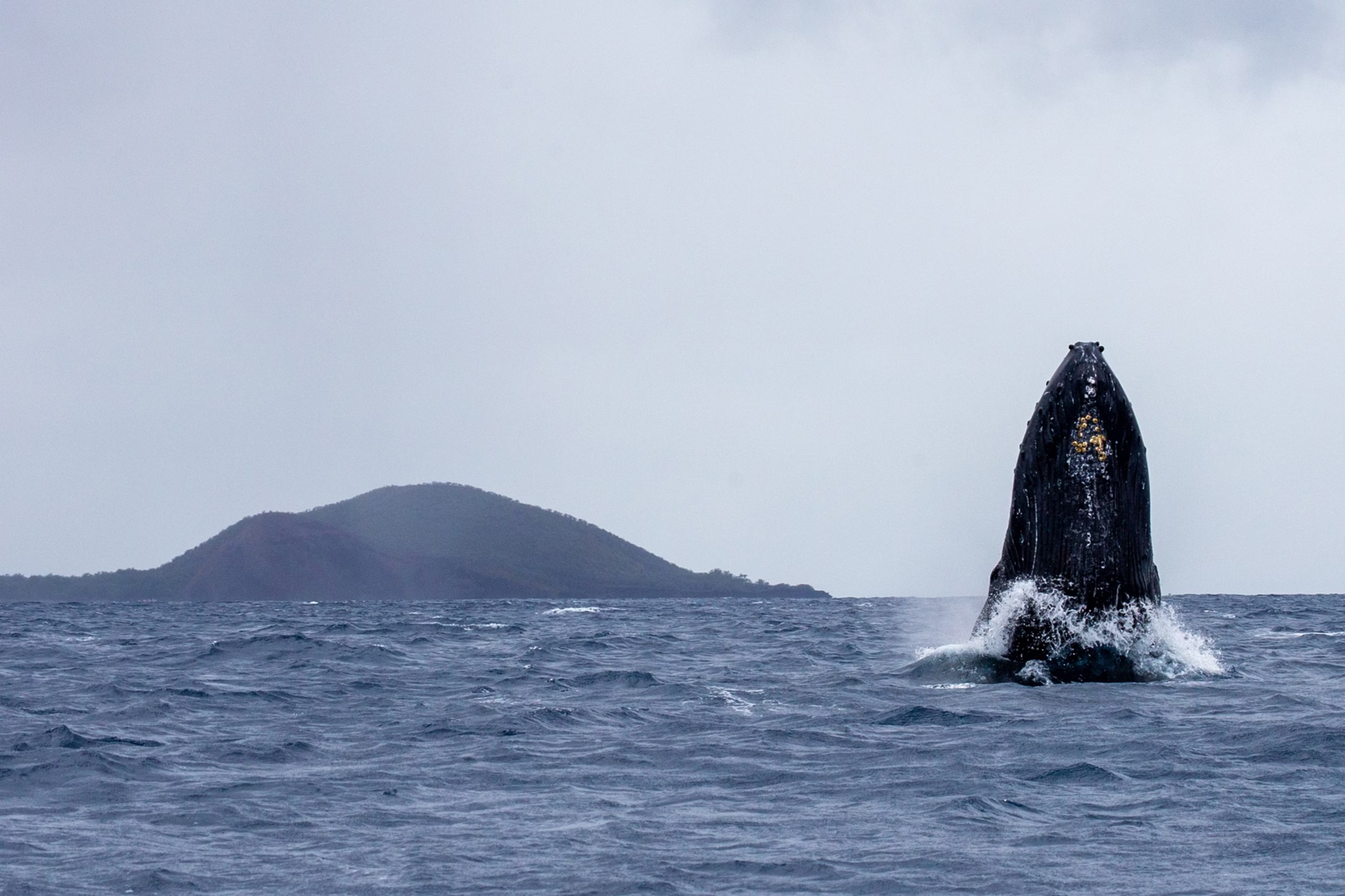
Whales do not leap at random. If you watch the water closely, subtle surface signatures reveal what comes next. A rapid series of deep tail slaps often builds momentum before an explosive leap, while an abrupt drop in forward movement usually precedes a vertical spyhop where the animal raises its head above the water line to look around. Keeping both eyes open instead of pressing your non-dominant eye shut lets you track dark shadows shifting underneath teh blue surface moments before the breach occurs. On trips for whale watching hawaii oahu excursions, observing water displacement around the perimeter of the pod provides your earliest visual warning. Learn more about how these marine mammals travel through Hawaiian channels in our detailed post on Humpback Whale Migration Patterns.
Pacific humpbacks frequently execute repetitive behavioral sequences. When a juvenile or adult male begins a breach sequence, they rarely stop after single leap. They often perform three, five, or even eight consecutive breaches in a straight trajectory, allowing photographers to adjust exposure and tracking frame by frame. Research recorded by the Hawaiian Islands Humpback Whale National Marine Sanctuary confirms these display patterns serve communicative and social functions within pod dynamics.
The heartbeat of the Pacific lives in the sudden, thunderous crash of a massive tail fin hitting the sea. Anticipation is your best lens.
Camera Body Requirements and Sensor Considerations
photographing action from a rolling deck tests camera hardware to its limit. Frame rate speed determines how many individual phases of a high-speed breach you capture between initial water displacement and splashdown. You need a camera body capable of continuous shooting speeds of at least 10 frames per second, though modern mirrorless sensors offering 20 to 30 frames per second provide a dramatic advantage. High continuous burst rates ensure you catch the exact instant the head breaks the surface with water sheets cascading off the pectoral fins.
Buffer depth matters just as much as frame rate. A fast continuous drive mode is useless if your camera buffer fills up and locks the shutter after two seconds of shooting. Look for camera bodies that support high-speed UHS-II SD cards or CFexpress media, allowing the buffer to clear continuously while you track a breaching pod. Weather sealing is equally critical because ocean spray and windborne salt mist coat camera gear within minutes on open water, so rubber gaskets around battery doors and card slots are something you cannot do without.
Lens Selection and Focal Range Dynamics
Choosing lenses for marine wildlife photography involves balancing reach against framing flexibility. Fixed prime telephoto lenses like a 500mm or 600mm limit your ability to compose shots when a 45-foot koholā breaches close to the boat deck. A variable telephoto zoom lens gives you the agility to zoom out when an animal surfaces nearby or zoom in on distant surface slaps across the channel.
| Focal Range | Primary Application | Vessel Class Compatibility |
|---|---|---|
| 70-200mm f/2.8 or f/4 | Close passes, mother-calf pods, wide environmental framing | Rafts, rigid inflatable zodiacs, low decks |
| 100-400mm / 150-600mm | Standard distance breaches, tail flukes, peduncle slaps | Mid-size power catamarans, double-deck vessels |
| 300mm or 400mm Fixed Prime | Distant blows, isolated behavior tracking | Calm sea conditions, stable upper observation decks |
Telephoto zooms in the 100-400mm range remain the industry standard for ocean charters. They provide sufficient reach for legal viewing distances while allowing instant focal adjustments when a majestic whale changes direction underwater and emerges closer than expected.
Shutter Speed Mastery and Motion Control
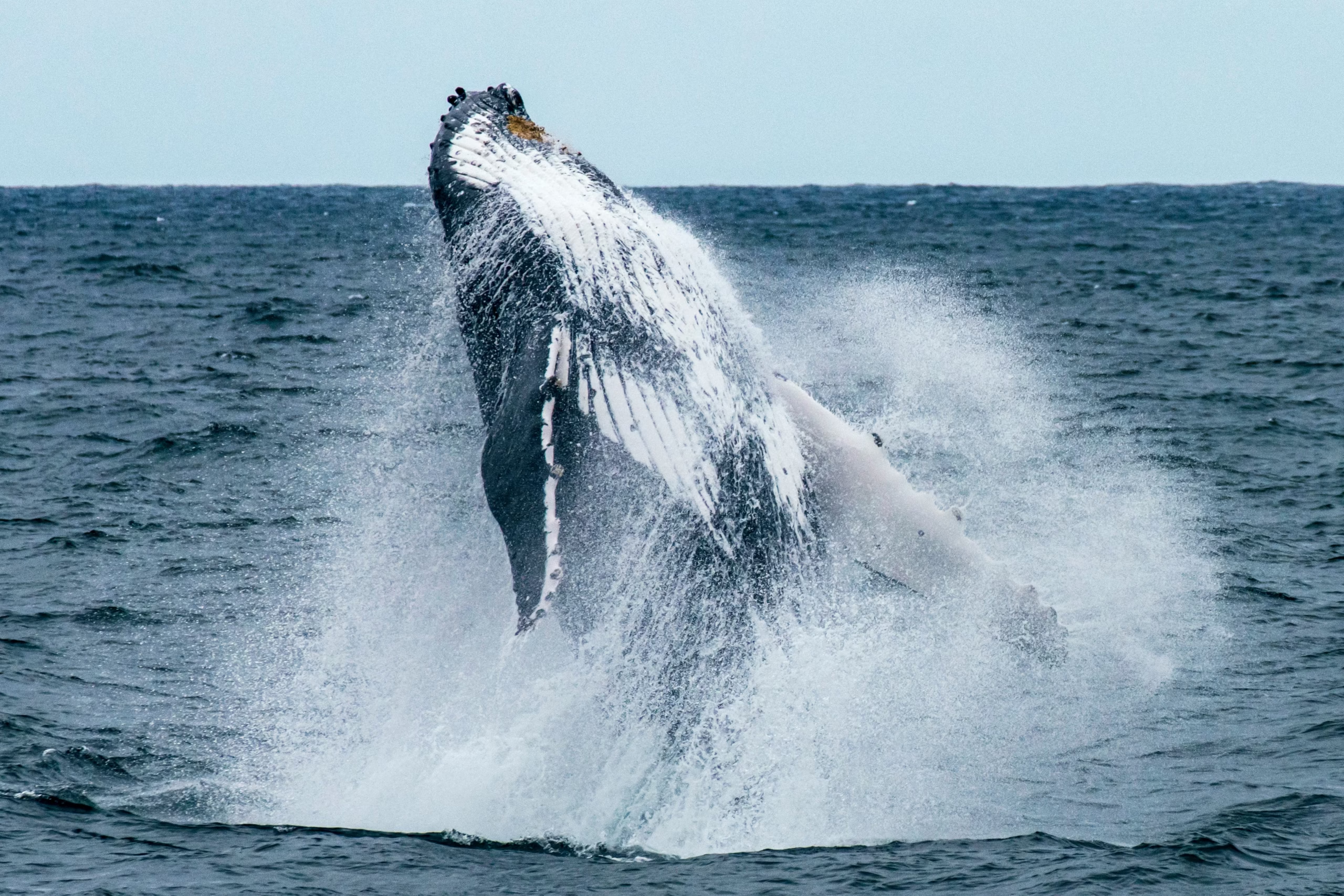
Action on the ocean involves two distinct sources of movement: the speed of the whale breaking the surface and the constant movement of the boat rolling over sea swells. To freeze flying ocean drops and razor-sharp skin texture on a breaching whale, set your shutter speed to a minimum of 1/1600s. When conditions allow, pushing shutter speed up to 1/2500s or 1/3200s eliminates micro-blur caused by vessel engine vibrations and wave action, providing crisp detail across the entire frame.
Shooting in Manual Mode with Auto ISO set gives you full authority over shutter speed and aperture choices while letting the camera adjust sensitivity to changing cloud cover. Hawaiian tropical light changes rapidly as squalls pass over island peaks, making manual ISO adjustments impractical during fast-moving encounters. Keeping your shutter speed locked at high values guarantees that every explosive breach remains tack-sharp regardless of light fluctuations.
Aperture, Depth of Field, and ISO Management
Resist the temptation to shoot wide open at f/2.8 or f/4 when photographing marine mammals at close range. A giant humpback whale measures forty to fifty feet in length, meaning shallow depth of field causes the rostrum to stay sharp while the eyes, blowhole, and dorsal fin drift out of focus. Selecting an aperture between f/5.6 and f/8 delivers wider focal depth across the body while keeping the lens in its optical sweet spot for maximum edge-to-edge sharpness.
Bright sun off Maui or Oahu usually allows low base ISO settings between 200 and 400 even at high shutter speeds. When afternoon cloud cover builds over the mountains, Auto ISO will raise camera sensitivity to maintain shutter speed limits. Set your camera ISO upper cap to 3200 or 6400 depending on sensor performance, ensuring noise stays low enough to preserve delicate skin textures, barnacle encrustations, and ventral groove details.
Autofocus Modes and Subject Tracking Setup
Ocean surfaces confuse camera autofocus systems. Rolling waves, whitecap foam, and rising water spray force focus points to hunt back and forth if tracking settings are misconfigured. Configure your camera to Continuous Autofocus (AF-C on Sony/Nikon, AI Servo on Canon) paired with an expanded flexible spot or zone area focus mode rather than full-area automatic point selection.
Modern mirrorless animal detection eye-tracking software performs exceptionally well on land animals, but cetaceans lack sharp facial contrast when surfacing through white water foam. Dynamic expansion zone modes lock focus onto the dark, contrast-rich skin mass of the whale rather than getting tricked by surrounding splash patterns. Setting back-button autofocus separates focus initiation from shutter activation, letting you hold focus tracking continuously as you wait for the full breach apex.
Handling the Rolling Deck
Tripods and monopods are dangerous and ineffective on commercial tour boats. Deck vibrations transfer directly into your camera sensor, while sudden boat rolls can tip heavy gear overboard. Stand with feet shoulder-width apart, keep knees flexed as natural shock absorbers, and tuck elbows flush against your torso. Check our What to Wear & Packing Guide to choose footwear with non-marking rubber soles engineered for wet boat decks.
Protecting Your Equipment
Salt spray dries into microscopic crystals that ruin front lens elements and corrode electrical contacts. Keep a high-quality UV filter mounted as sacrificial glass and carry clean microfiber cloths stored in sealed plastic bags. Review marine forecast updates provided by the National Weather Service Marine Forecast before boarding to prepare proper waterproof bags for rough sea conditions.
When the ocean shifts beneath your feet, your knees become the gimbal and your shutter must already be firing.
Framing, Composition, and Horizon Control
The most common error amateur photographers make is zoom-tightening directly onto the whale body, cutting off flying water plumes and contextual island surroundings. Leaving generous negative space inside your frame conveys true scale against the vast blue expanse of the Pacific. Position the camera focus tracking point slightly ahead of the surfacing path so the whale appears to leap forward into empty frame space.
A tilted horizon ruins ocean compositions quickly. Boat tilt combined with sudden breach action causes camera angles to shift wildly off level. Keeping in-camera electronic level indicators visible inside your viewfinder or electronic display helps you track horizontal lines against West Maui slopes or the Oahu shoreline. Crop and level adjustments in post-processing require extra resolution headroom, making wide initial framing even more useful.
Ethical Photography and Federal Guidelines
Federal law dictates strict viewing regulations around humpback whales throughout Hawaiian waters under the Marine Mammal Protection Act. Vessels must maintain a minimum distance of 100 yards from humpbacks in all directions. Pushing boat captains to maneuver closer or using unauthorized low-flying drones disrupts natural breeding, nursing, and resting behaviors across Hawaiian marine sanctuaries.
Ethical wildlife photography focuses on capturing undisturbed behavior at respectful distances using appropriate telephoto lenses. For full regulatory details, consult the NOAA Fisheries Hawaii Viewing Guidelines. Selecting ethical, conservation-minded tour operators ensures your marine excursion directly supports ocean protection initiatives while keeping cetacean pods safe, brah.
Selecting the right boat layout makes a massive difference in your photographic success rate. Low-profile rigid inflatable rafts bring you closer to water level for dramatic wide-angle perspectives, while multi-deck catamarans provide stable elevated platforms ideal for long focal range tracking. Explore vessel types and book photography-friendly excursions through our dedicated Guided Tours & Lessons directory, and review seasonal weather trends on our Best Time & Weather Guide before selecting tour dates across our Island Destinations & Regional Guide.