
Hawaiian Cultural Significance of the Kohola
Cosmology of the Koholā and the Ancient Kumulipo
Long before foreign sails appeared on the horizon, native Hawaiians understood the ocean as the source of all life. In the Kumulipo, the sacred Hawaiian creation chant containing over two thousand lines of genealogical history, life begins in the dark, cool depths of the ocean. The chant establishes a direct familial lineage between marine organisms and terrestrial plants, pairing sea creatures with land counterparts as spiritual equals. Within this cosmogony, the koholā (humpback whale) holds a elevated place among the ocean offspring born during the early eras of creation.
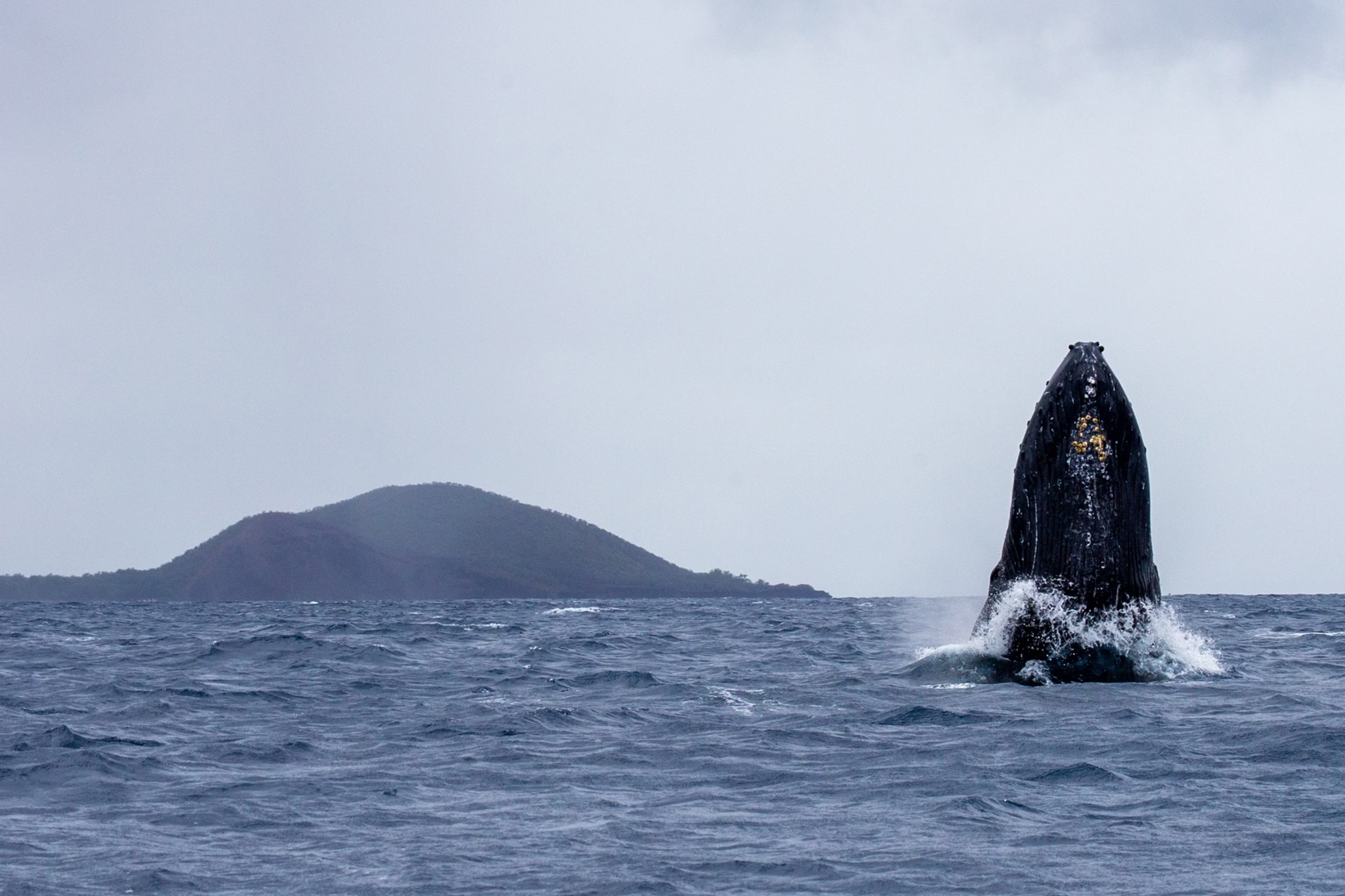
Looking back at my salt-crusted field journal from my early days captaining research vessels in the Auau Channel, I wrote about how ancient Hawaiians viewed these ocean giants not as commercial resources, but as divine manifestations. The koholā was paired in the Kumulipo with the palaʻā fern, creating an interconnected bond between mountain rainforests and deep oceanic depths. When a forty-ton whale breaches into the tropical air, the impact vibrates through the hull of a boat in a way that feels like the very heartbeat of the Pacific. Out on the water, brah, you feel that raw energy in your chest before you even hear the splash.
“In Hawaiian thought, the ocean is not a barrier dividing islands; it is the highway that connects all life, governed by guardians who travel between worlds.”
The Humpback Whale as a Sacred ‘Aumakua
Central to traditional Hawaiian spiritual beliefs is the concept of the ‘aumakua, ancestral guardians who take physical form in the natural world. Families tied to ocean trades passed down spiritual connections to specific marine creatures, including sharks, sea turtles, and whales. An ‘aumakua served as a protector, guiding voyaging canoes through dangerous sea conditions, steering fish toward shore, and delivering spiritual messages between the living world and the ancestral realm, known as the ao.
Spiritual Protectors of the Ocean
The koholā represented immense spiritual power, or mana. Because humpback whales swim freely across vast expanses of open ocean, traditional practitioners viewed them as ultimate navigators. Ancient mariners observed their seasonal movements and respected their presence, offering chants of gratitude whenever a pod accompanied a voyaging canoe across open water.
Bridging Realm and Reality
Unlike standard marine animals, an ‘aumakua possessed a personal familial bond with specific lineages. Descendants paid deep resepct to their guardian animals through strict kapu laws, ensuring no family member would ever harm, harass, or consume a creature recognized as their living ancestor.
Oral Traditions Recorded in Hawaiian Chants (Oli)
Traditional Hawaiian history was preserved through oral performance, specifically through oli (unaccompanied chants) and mele (songs). These vocal compositions recorded detailed observations of whale behavior, migratory timing, and weather shifts centuries before Western scientists began documenting marine mammals. Archives preserved at the Bernice Pauahi Bishop Museum contain chants that reference the mist of the whale’s spout (hā) and the rhythmic slap of its tail against the surface.
Chants often linked the dramatic surface behaviors of the koholā with environmental phenomena. A majestic breach on the horizon was read by kahuna (priests and experts) as a sign of shifting ocean currents or incoming winter swells. Understanding humpback whale migration patterns in Hawaii reveals how precisely ancient Hawaiians mapped the arrival of these animals alongside seasonal trade wind changes.
Makahiki, Kanaloa, and Seasonal Indicators
The annual winter arrival of the whales coincides with the season of Makahiki, a four-month period dedicated to Lono, the deity of fertility, agriculture, and rain. During Makahiki, traditional warfare ceased across all islands, heavy labor paused, and communities gathered for harvest celebrations, athletic games, and spiritual ceremonies. The presence of the koholā in shallow coastal waters signaled the height of this peaceful season.
| Hawaiian Term | Literal Translation | Cultural and Environmental Significance |
|---|---|---|
| Koholā | Humpback Whale | Physical embodiment of marine deities and sacred ancestral guardian (‘aumakua). |
| ‘Aumakua | Ancestral Guardian Spirit | Deified ancestors taking physical forms in nature to protect and guide living kin. |
| Makahiki | Harvest and Peace Festival | Four-month winter period dedicated to Lono, coinciding with the arrival of whales. |
| Mālama ‘Āina | To Care for Land and Sea | Core Hawaiian ethos of environmental stewardship and reciprocal respect. |
| Lei Niho Palaoa | Whale Tooth Pendant | Sacred neck ornament carved from whale ivory, worn exclusively by high chiefs (ali’i). |
In Hawaiian cosmology, the koholā is also tied to Kanaloa, the god of the ocean depths, sea life, and long-distance navigation. Kanaloa is associated with the vast blue water beyond the reef, making the whale a visible messenger from his distant realm. When farmers in upper island valleys observed whale spouts rising along the coast, they knew it was time to plant winter crops like taro and sweet potato.
Archaeological Evidence and Sacred Artifacts
Physical evidence of the whale’s cultural significance survives in archaeological sites across the archipelago. Rock carvings, or petroglyphs, carved into basalt lava flows at sites like Olowalu on Maui and Luahiwa on Lanai depict marine organisms and traditional double-hulled canoes. These carvings reflect a deep daily relationship with marine life.
One of the most sacred physical objects in Hawaiian culture is the lei niho palaoa, a neck pendant carved from a humpback or sperm whale tooth suspended on braided coils of human hair. These items were reserved strictly for aliʻi (high-ranking chiefs). The pendant symbolized supreme authority, spiritual strength, and the chief’s duty to protect their people. Hawaiians never hunted whales for these teeth; instead, they harvested ivory only when a whale naturally stranded on the shore, viewing the event as a direct gift from Kanaloa.
Western Whaling and the Disruption of Traditional Knowledge
The late eighteenth and early nineteenth centuries brought drastic changes to the Hawaiian Islands. Foreign commercial whaling ships established major ports at Lahaina on Maui and Honolulu on Oahu, exploiting Hawaii as a central Pacific refueling station. Thousands of humpback whales were hunted to near extinction across North Pacific waters during this commercial era.
This period caused severe disruption to traditional Hawaiian life. Indigenous spiritual practices and traditional management systems were suppressed under foreign influence. Despite these pressures, Hawaiian families continued passing down knowledge of teh koholā through private family traditions, keeping the memory of their ‘aumakua alive across generations.
Modern Alignment: Sanctuary Protection and Mālama ‘Āina
In 1992, the federal government established the Hawaiian Islands Humpback Whale National Marine Sanctuary to safeguard the shallow warm waters surrounding Maui Nui, Oahu, Kauai, and Hawaii Island. Encompassing nearly 1,400 square miles, this marine reserve serves as the primary nursery and mating ground for thousands of returning humpback whales each winter.
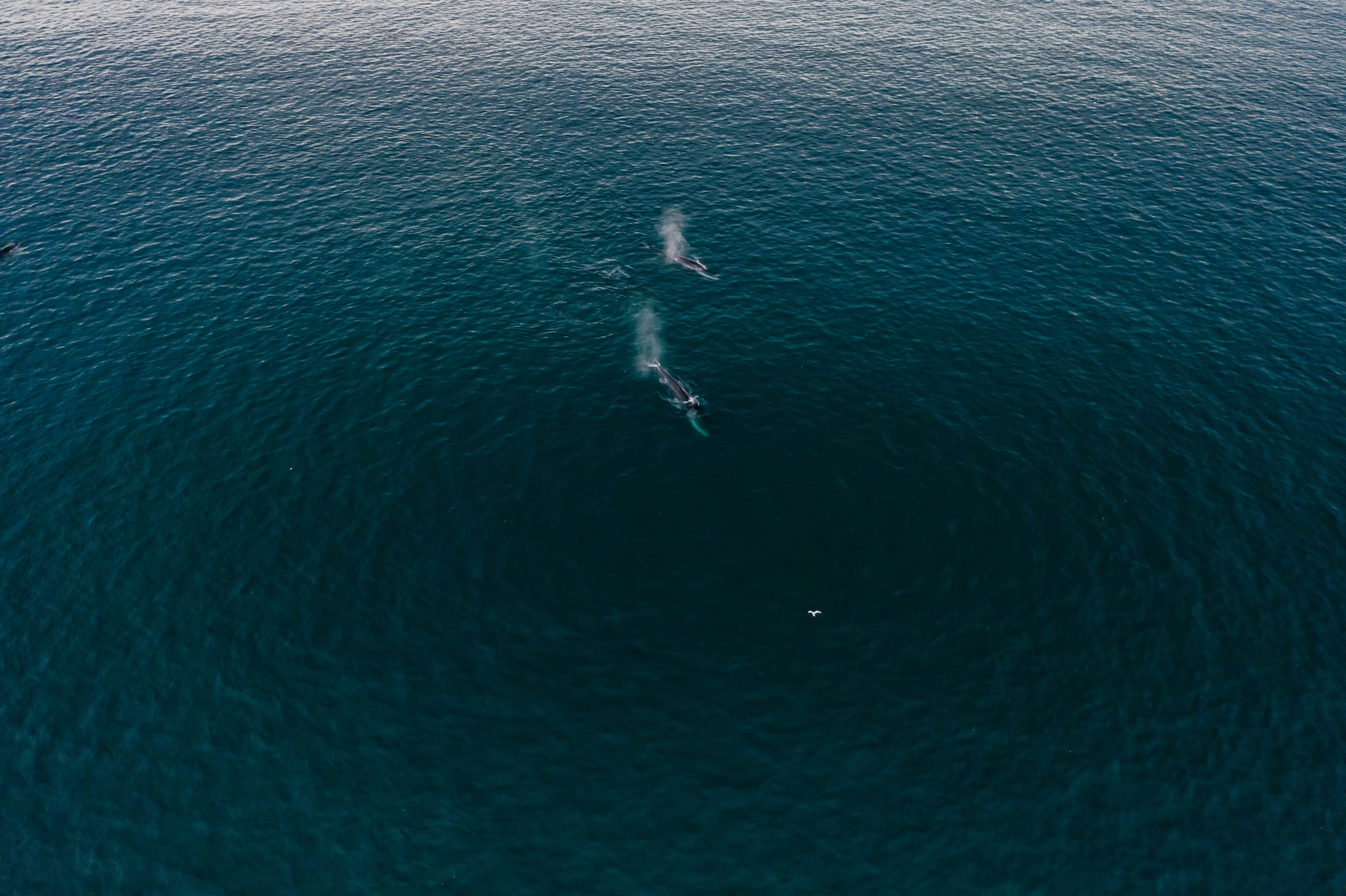
This conservation framework mirrors the ancient ethos of mālama ‘āina, the traditional duty to care for, protect, and maintain the natural world. Modern marine biologists and cultural practitioners work side by side within the sanctuary to ensure protective regulations remain grounded in indigenous ecological knowledge. Understanding the best time to go to hawaii for whale watching helps visitors witness these protections in action during peak migration months between January and March.
Ethical Observation and Cultural Excursions
Today, visitors to Hawaii have the opportunity to participate in wildlife observation that honors ancient Hawaiian traditions. Cultural protocols emphasize entering the ocean with mind, avoiding disruptive noises, and keeping safe distances. Under federal law, boats must remain at least 100 yards away from humpback whales in Hawaii, allowing the animals to approach on their own terms.
- Observe with Pono (Righteousness): Select eco-conscious tour operators that prioritize wildlife conservation and employ knowledgeable naturalists.
- Listen to the Ocean: Tour vessels equipped with hydrophones allow passengers to experience listening to whale songs underwater, connecting audio acoustics with visual sightings.
- Capture Moments Responsibly: Photographers working on photographing breaching whales should focus on patience and natural behavior rather than encouraging captains to chase animals.
- Explore Island Regional Diversity: Excellent opportunities exist across the state, from Maui Nui to guided tours departing from Kona on the Big Island.
If you are planning an excursion, research regional options in our island destinations guide to choose the best departure point for your itinerary. Travelers interested in whale watching hawaii big island operations will find pristine coastal waters where deep drop-offs bring humpback pods exceptionally close to shore. Make sure to consult our guide on what to wear on a whale watch so you stay comfortable on the water, and check out other things to do in Hawaii to build a respectful, culturally rich itinerary. That is the kind of sacred heritage we are all living alongside of.
“When we view the koholā not merely as an attraction, but as a living relative returning home to give birth, our entire perspective on ocean conservation transforms.”